
Does Homeowners Insurance Cover Water Damage in Anaheim?
Does homeowners insurance cover water damage in Anaheim? Yes, when the damage is sudden and accidental. A burst pipe, a failed water heater, or a washer hose that lets go are covered. A standard homeowners policy pays for all three.
Floods, slow leaks, and sewer backups are not covered. You need extra coverage for those, or a separate flood policy. Your policy wording makes the final call.
Last updated November 20, 2026. This guide explains general rules, not your policy. Read your declarations page for the exact terms.
The short answer
So, does homeowners insurance cover water damage? It depends on where the water came from. Water that starts inside your home, suddenly, is usually covered. Water that comes from outside, or builds up slowly, usually is not.
| Water source | Usually covered? | Why |
|---|---|---|
| Burst pipe | Yes | Sudden and accidental |
| Water heater failure | Yes | Sudden and accidental |
| Washer or dishwasher overflow | Yes | Sudden and accidental |
| Rain through a storm-damaged roof | Yes | Wind caused the opening |
| Slow leak under a sink | No | Gradual damage, maintenance |
| Flood from outside | No | Needs a separate flood policy |
| Sewer or drain backup | No, unless endorsed | Needs a water backup endorsement |
| Groundwater seepage | No | Excluded, and flood policies leave it out too |
The table is a general guide. Endorsements and your adjuster's findings can change any row. The rest of this guide goes row by row. It answers 'does homeowners insurance cover water damage' for each source, so you can see where your loss falls.
What homeowners insurance covers
Does homeowners insurance cover water damage from a burst pipe? Yes, in most cases. A burst pipe is the classic sudden and accidental loss. The same goes for a failed water heater, a broken washer hose, and an overflowing dishwasher.
Rain counts too, when wind made the opening. A storm tears off shingles, rain comes through the hole, and the damage inside is covered. The roof repair itself may not be covered if the roof was old and worn out. The water damage inside still can be.
The policy wording names this peril as accidental discharge or overflow of water. It covers plumbing, heating, and air conditioning systems. The key word is accidental. The loss must be sudden and unforeseeable.
One nuance matters. The policy usually pays for the damage the water caused, not for the failed part itself. It pays to fix the soaked drywall and flooring. It does not pay to replace the burst pipe or the broken dishwasher. See our burst pipe cleanup page for what that job involves.
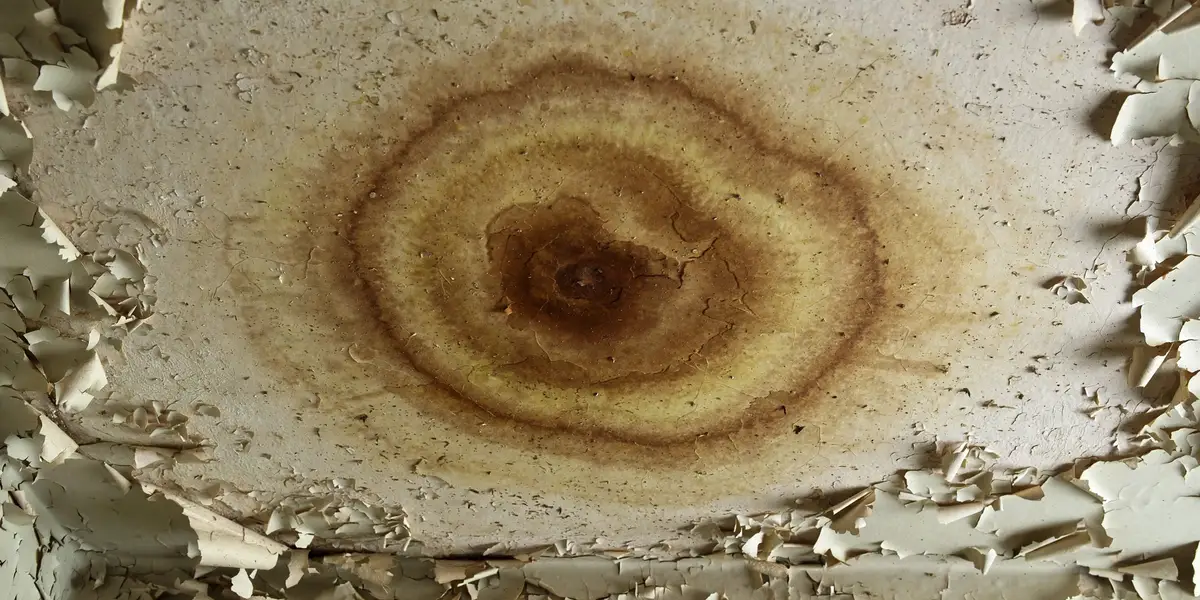
Rain through a storm-damaged roof is usually covered. The stain shows where water entered, and the adjuster will want to see it before repairs start.
What it does not cover
To answer 'does homeowners insurance cover water damage' for your home, find where the water started. These sources are usually not covered.
- Slow or hidden leaks, because insurers see them as a maintenance problem
- Floods from outside, such as storm surge, overflowing rivers, and pooling rainwater
- Sewage or drain backup, unless you added a water backup endorsement
- Groundwater seeping through foundation cracks or walls
- Damage from a problem you knew about and did not fix
- Mold from long-term moisture or from a water source the policy excludes
- Earth movement, such as earthquakes, mudslides, or landslides
- Sump pump failure
A worn-out roof is a common surprise. The water damage inside may be covered, but the roof repair itself usually is not. The insurer sees the roof as wear and tear.
The same logic applies to a leak you knew about. A faucet that dripped for months is not sudden. The insurer will call it neglect, and the claim will fail.
Water damage vs flood damage
Flood damage is different. The answer to 'does homeowners insurance cover water damage' from a flood is no. Water damage and flood damage look the same once water is on the floor. Insurers define them differently, and they sit under separate policies.
| Water damage | Flood damage | |
|---|---|---|
| Where it starts | Inside the home, or through a storm opening above | Outside, at ground level or below |
| Examples | Burst pipe, appliance overflow, rain through a damaged roof | Storm surge, overflowing river, heavy rain pooling |
| Covered by homeowners policy | Yes, when sudden and accidental | No |
| Covered by | Homeowners policy | Separate flood policy |
The National Flood Insurance Program, run by FEMA, sells flood policies through private agents. A standard NFIP policy covers the structure up to $250,000 at replacement cost. Contents are covered up to $100,000 at actual cash value. Private flood insurers offer higher limits.
A new flood policy usually starts 30 days after you buy it. There is an exception when a lender requires flood insurance to close a loan. Fewer than 5 percent of California homes carried NFIP flood insurance in September 2019. That figure comes from the California Department of Insurance.
Rain through a wind-damaged window or roof is not flood damage. It is windstorm damage, and your homeowners policy covers it. The line is simple: water that falls through a hole the wind made is covered. Water that rises from the ground is not. If flood water did get in, our flood damage cleanup page explains the cleanup steps.
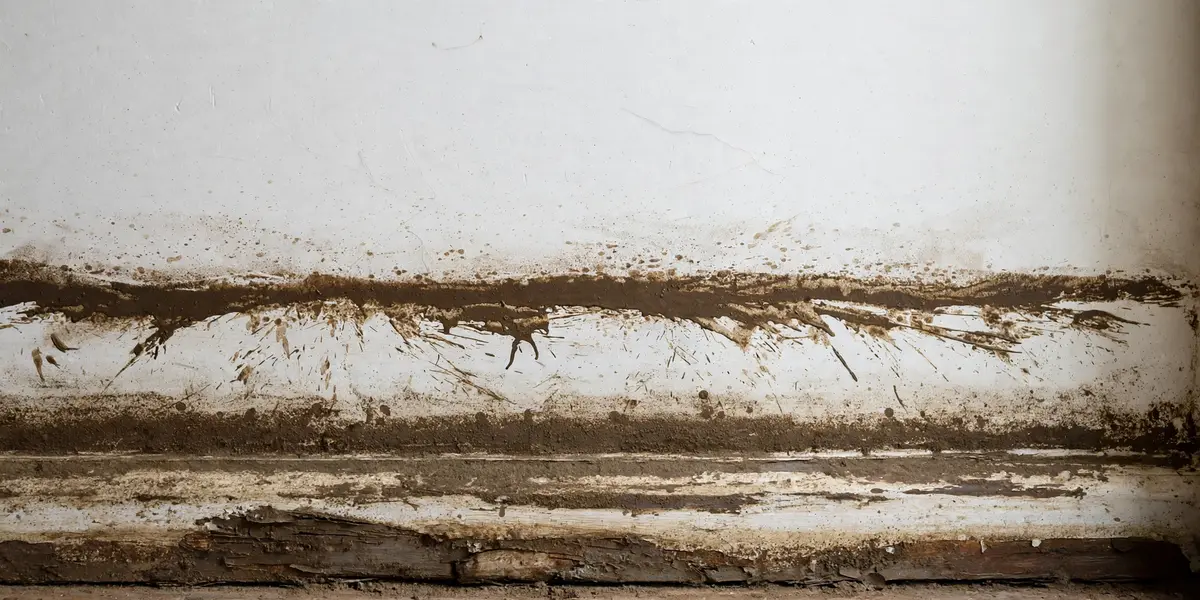
A flood waterline on a wall tells the adjuster the water came from outside. That makes it a flood claim, not a homeowners claim.
The sudden-and-accidental rule
Insurers do not cover water damage as a category. They cover perils. The water peril in a standard policy is usually worded as accidental discharge or overflow. It covers plumbing, heating, and air conditioning systems.
Adjusters read accidental as sudden and unforeseeable. A supply line that bursts while you are at work qualifies. A pipe that dripped behind a wall for six months does not.
Most California homeowners policies are all-risk policies. They cover sudden and accidental water releases, and they exclude gradual leaks, seepage, and surface flooding. The covered cause matters more than the dollar amount.
Why gradual damage gets claims denied
The most common water claim denial is not flood or sewer. It is the adjuster deciding the damage was gradual. Long-term seepage, repeated leaking, or wear that a reasonable homeowner would have noticed and fixed.
Policies exclude constant or repeated seepage or leakage over a period of weeks, months, or years. One filed USAA form defines that period as 14 days or more. Adjusters look for physical signs. Rust staining, delaminated flooring, rotted framing, dark mold growth, and mineral deposits around the leak all point to gradual damage.
Fresh damage looks different. A pipe that burst yesterday leaves wet, swollen, but sound material. A leak that ran for six months leaves decay. The adjuster can tell the difference, and the photos you take on day one are your best proof.
If you find a hidden leak, act the same day. Shut off the water, call for help, and document what you see. Our leak detection page explains how hidden leaks are found before they become a denial.
Sewer backup and the endorsements that fix it
Water that backs up through a sewer line, floor drain, toilet, or sump pump is excluded from most standard policies. The fix is a water backup endorsement, sometimes called sewer backup or sump overflow coverage.
| Endorsement | What it pays for | Typical cost | Typical limit |
|---|---|---|---|
| Water backup | Damage from sewer, drain, or sump backup | $50 to $250 a year | $5,000 to $25,000 per occurrence |
| Service line | Repair of the underground pipe itself | $20 to $50 a year | About $10,000 |
The two endorsements do different jobs. Water backup pays for the damage inside your home. It never pays for the pipe. Service line pays to repair the underground pipe, including digging to reach it. It never pays for the water damage.
Water backup also covers mold caused directly by the backup, and it covers sump pump failure. It does not cover flooding, wear and tear, or the sump pump itself. Check your declarations page for endorsements named water backup, sewer backup, sump discharge, or service line. Our sewage backup cleanup page explains what the cleanup involves.
Does insurance cover mold after water damage
Does homeowners insurance cover water damage that leads to mold? It can, when the mold comes from a covered sudden event. A burst pipe, a toilet overflow, or a broken washer hose are the usual examples. The California Department of Insurance puts it this way. Mold damage caused by a covered peril may be covered under your homeowners policy.
Mold from a slow leak, neglect, or flood is not covered. The National Flood Insurance Program generally does not cover mold either. The cause decides, and the policy wording decides the rest.
Even when mold is covered, the payout is usually capped. Most policies cap mold remediation at $1,000 to $10,000 per occurrence. Some published forms set the cap at $5,000, and some go as high as $50,000 with extra coverage. Read your policy for the exact number.
Mold can start within 24 hours of water exposure. The first 48 hours are the most important for stopping it. That is why fast drying matters more than the claim paperwork. Our mold remediation page covers the signs and the steps.
One more point helps if a claim is denied for mold. A blanket denial stamped mold does not always end the claim. The underlying water damage, drying, tear-out, and replacement may still be covered. Ask the adjuster to separate the two.
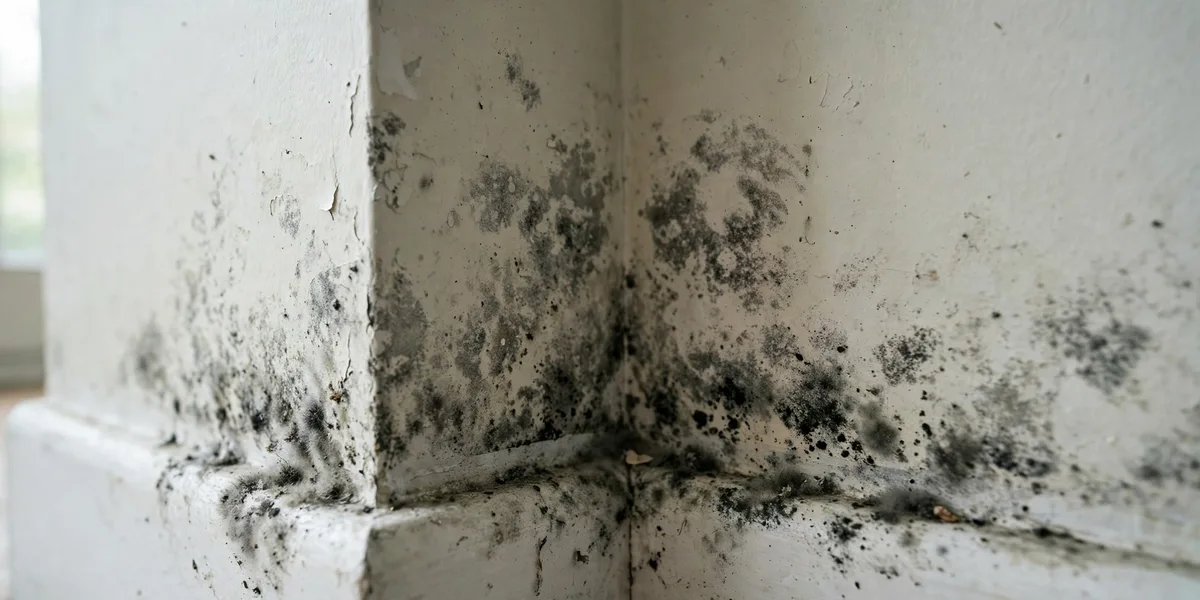
Mold from a burst pipe can be covered. Mold from a slow leak usually is not. The cause decides.
How to file a water damage claim, step by step
Filing a claim is mostly about doing things in the right order and keeping good records. These eight steps cover the process.
- Stop the source. Shut off the water at the main valve. Your insurer expects you to limit further damage.
- Document everything before you clean anything. Photos and video come first.
- Call your insurer. Report the damage as soon as you can, ideally within 24 to 72 hours. Have your policy number ready.
- Call a restoration company. An IICRC-certified crew can start emergency drying while the claim moves forward.
- Make temporary repairs. Cover exposed areas with tarps and save every receipt.
- Meet the adjuster. Be there for the inspection and walk through every affected area.
- Get a repair estimate. Compare it with the settlement offer before you accept anything.
- Finish the repairs and keep the receipts. Your insurer may ask for them to close the claim.
Do not start permanent repairs before the adjuster has seen the damage, unless waiting would cause more harm. The adjuster needs to see the loss as it happened. For the job itself, see our cost guide for the published price ranges. If water is spreading now, go to our emergency water removal page.
What to document before the adjuster arrives
Good documentation is the backbone of a successful claim. Without it, you are asking the insurer to take your word for it. That rarely works in your favor.
- Wide shots of each affected room, showing the full scope
- Close-ups of damaged flooring, drywall, baseboards, and trim
- The source of the water, if you can see it safely
- Water lines on walls, showing how high the water reached
- Damaged belongings, with brand, age, and approximate value
- A written inventory of every damaged item, with purchase dates and receipts where you have them
- Plumber, contractor, and mitigation invoices
- Moisture readings and written inspection reports
- Every email, letter, and phone call with the insurer, with dates
Take the photos before cleanup begins. The adjuster uses the original state as the baseline for valuing the loss. Keep the originals and build a dated claim file.
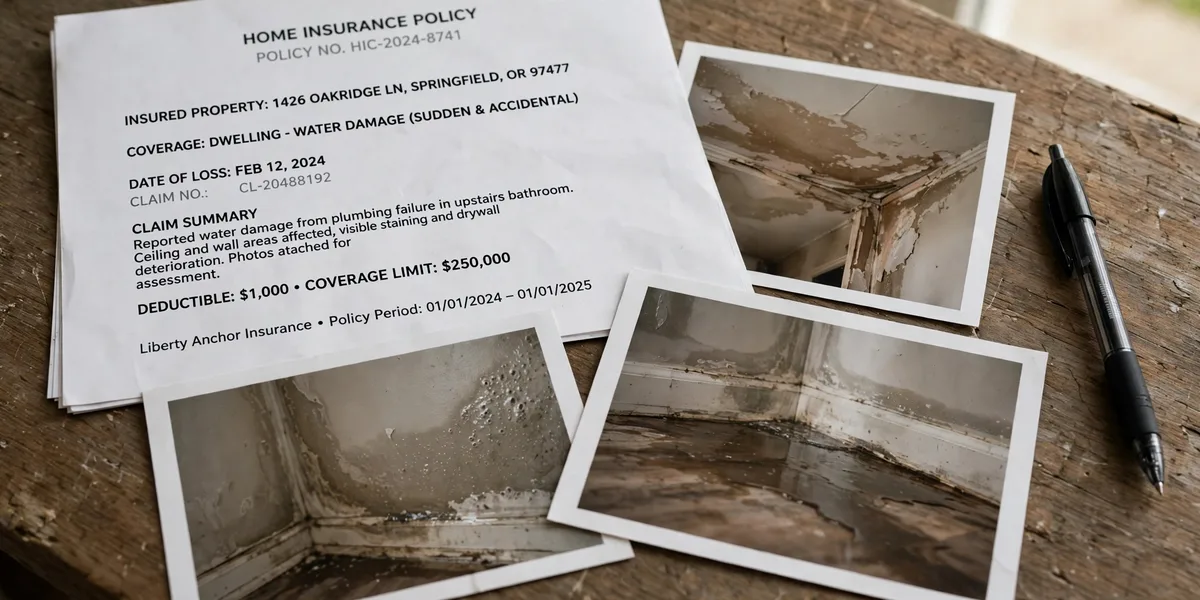
Photos, an inventory, and every receipt go in one dated claim file. The adjuster will ask for all three.
Working with the adjuster
After you file, the insurer sends an adjuster to inspect the damage. This person works for the insurance company, not for you. Their job is to assess the loss and decide what the policy pays.
Be present during the inspection. Walk the adjuster through every affected area and share your photos, videos, and inventory. Have your restoration company's estimate ready. A detailed professional estimate gives you leverage if the adjuster's number comes in low.
The adjuster decides whether the answer to 'does homeowners insurance cover water damage' is yes for your loss. Ask the adjuster to explain the cause, the scope, the deductible, and the coverage limits. An initial estimate can change when hidden damage turns up during repairs.
You can also hire a public adjuster. A public adjuster works for you, not the insurer, and helps with the claim and any appeal. Ask about the deductible too. It comes out of your pocket first, and your water backup deductible may differ from your standard deductible.
Your policy pays either replacement cost or actual cash value. Ask your adjuster which one you have, because it changes the payout.
California deadlines you should know
Under the Fair Claims Settlement Practices Regulations, the insurer must acknowledge your claim within 15 calendar days. It must also give you the forms and instructions, and start its investigation.
After the insurer receives your proof of loss, it generally has 40 days to decide. It must accept or deny the claim in writing, or explain why it needs more time. Written updates follow every 30 days while the claim is pending. Once a claim is accepted, payment generally follows within 30 days.
Report the loss fast. The guidance is to call within 24 to 72 hours. Longer delays can be read as a coverage defense. Most California policies also require a sworn proof of loss within 60 days of the carrier's request.
If the insurer misses the 40-day deadline, contact the California Department of Insurance. The same applies if you believe a denial was improper.
Anaheim and Orange County: where the source decides
In Anaheim, does homeowners insurance cover water damage from a slab leak? It depends on whether the leak was sudden. A slab leak that burst is a sudden loss. A slab leak that seeped for months is gradual damage, and the claim will likely fail.
Anaheim has its own causes, and each one changes the answer. Postwar homes in West Anaheim still carry galvanized steel pipes that corrode and burst. Slab leaks are common in West Anaheim, where the pipe runs under the floor. Anaheim Hills homes face hillside drainage and irrigation leaks. Resort area motels see overflows that soak many rooms at once. Atmospheric river storms bring heavy rain that finds weak roofs and windows.
We serve every Anaheim ZIP code, 92801 to 92808, and every neighborhood from Anaheim Hills to the Platinum Triangle. Our service areas page lists them all. The cause decides the coverage, so the first question we ask is always where the water started. Whatever the cause, the question is the same: does homeowners insurance cover water damage from this source?
If your claim is denied
A denial is not the end of the road. Ask for the denial in writing and check which exclusion it cites. Then gather your photos, estimates, and moisture readings, and file an appeal.
It does not mean the answer is no for the whole job. If the denial cites mold, the underlying water damage may still be covered. If it cites gradual damage, your day-one photos are the evidence that matters most.
A public adjuster can help with the appeal. The California Department of Insurance can also help. Call them if you believe the denial was improper or the insurer missed its deadlines. Its hotline is 1-800-927-4357.
Where the rules come from
Coverage rules on this page come from published guides and regulator sources, checked in November 2026. They include MoneyGeek, RestoreMeter, the Washington Office of the Insurance Commissioner, and USAA. NerdWallet, The Zebra, and Insurance.com are cited too, along with the Connecticut Insurance Department and the Colorado Division of Insurance. Mold rules come from Select Your Cover, updated November 12, 2026, and Remediation Insider. Claim steps come from Texas Certified Restoration, Discover1st, SERVPRO, and Insurify.
California rules come from the California Department of Insurance. They sit in the Fair Claims Settlement Practices Regulations, Title 10, sections 2695.5 and 2695.7. A California claim guide explains how they work in practice. Flood limits come from the National Flood Insurance Program. The Connecticut Insurance Department and the Colorado Division of Insurance flood pages list them. This guide explains general rules. Your policy wording makes the final call.
Insurance questions, answered
Does homeowners insurance cover water damage in Anaheim?
Yes, when the damage is sudden and accidental, like a burst pipe or a failed water heater. Floods, slow leaks, and sewer backups are not covered unless you bought extra coverage. Your policy wording makes the final call.
Does homeowners insurance cover flood damage?
No. Standard homeowners policies exclude flood damage in every state. You need a separate flood policy through the National Flood Insurance Program or a private insurer. New flood policies usually start 30 days after you buy them.
Does homeowners insurance cover a burst pipe?
Yes, in most cases. A burst pipe is the classic sudden and accidental loss, so the water damage it causes is covered. The pipe itself is usually not covered. Only the damage the water caused gets paid.
Does homeowners insurance cover mold after water damage?
It can, when the mold comes from a covered sudden event like a burst pipe. Mold from a slow leak, neglect, or flood is not covered. Most policies also cap mold payouts, often between $1,000 and $10,000.
How long do I have to file a water damage claim?
Report it as fast as you can, ideally within 24 to 72 hours. In California, the insurer must acknowledge your claim within 15 days and decide within 40 days of proof of loss.
What should I do if my insurance claim is denied?
Ask for the denial in writing and check which exclusion it cites. Gather your photos, estimates, and moisture readings, then file an appeal. You can also hire a public adjuster or contact the California Department of Insurance for help.
Talk to the Anaheim team
Call now and describe what you see. We will tell you the next step.