
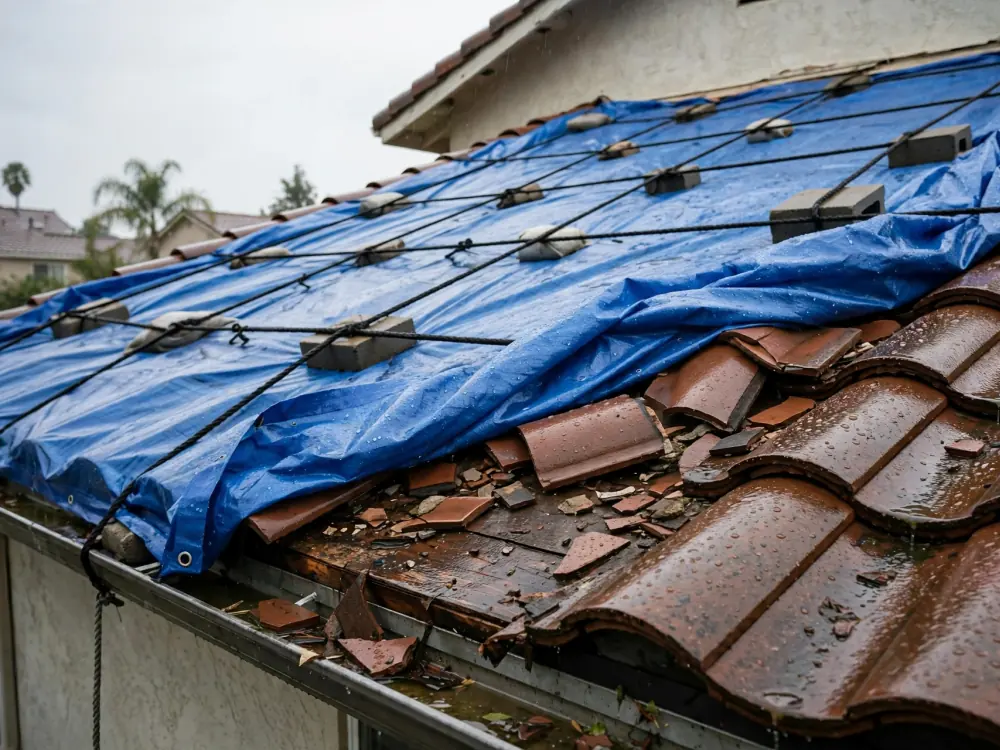
Storm Damage
Storm Damage Restoration in Anaheim, CA
Winter storms push rain through roofs, windows, and doors. We stop more water from getting in, dry your ceilings and walls, and repair the storm damage in your Anaheim home.
- Answered 24 hours a day
- Written estimate first
- We work with your insurance
- Every Anaheim ZIP code
What does storm damage restoration include?
It covers everything after the storm: covering openings to stop more rain, removing water, drying ceilings and walls, and repairing the damage. In Anaheim, most storm jobs start with a roof leak or runoff.
- About 12.5 inches of rain falls in Anaheim in an average year
- January is the wettest month, with about 3.2 inches
- Linked with our flood damage cleanup
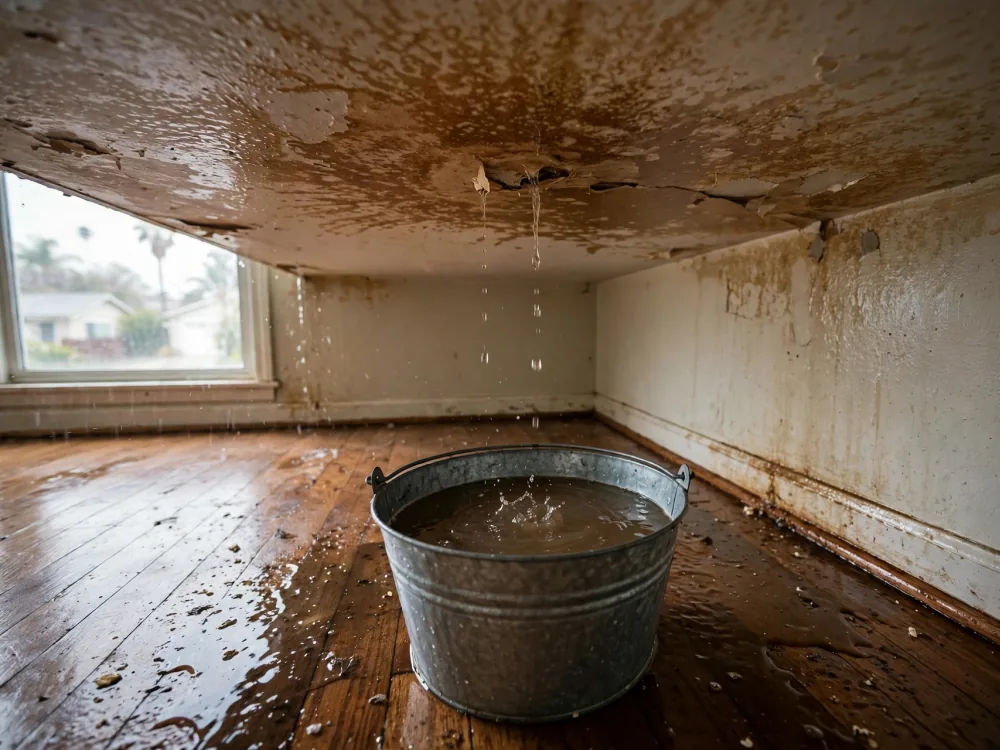
How storms damage Anaheim homes
Most of the year is dry, so roofs and drains get tested all at once when the rain comes.
Roof leaks
Cracked tiles, worn shingles, and gaps at flashing let rain into the attic and ceilings.
Clogged gutters and valleys
Leaves from a dry summer block gutters, and water backs up under the roof edge.
Window and door leaks
Wind driven rain gets past old seals and soaks walls below windows.
Hillside runoff
Water from slopes in Anaheim Hills runs toward garages and patios.
Flood Damage CleanupFallen trees and branches
Wind brings down limbs that crack roofs and let rain inside.
Long storms
Several days of steady rain soak areas that drip only in heavy storms.
Flood Damage CleanupRainy season in Anaheim 1.8Nov1.9Dec3.2Jan2.7Feb2.5MarAverage monthly rain in inches. Anaheim averages about 12.5 inches a year.
Signs of storm damage after rain
Check these after every big storm, even if nothing is dripping.
See a sign? Call (714) 555-0194- New ceiling stainsA brown ring after rain points to a roof leak.
- Damp attic insulationInsulation that feels wet or flat holds water above the ceiling.
- Wet walls under windowsStains or bubbling paint below a window sill.
- Water in the garageRunoff or a leak at the garage door line.
- Missing or cracked tilesVisible roof damage after high winds.
- Musty smell after rainMoisture trapped somewhere in the house.
Roof leaking during the storm? We can come now.
We cover the leak to stop more rain and start drying the same visit.
Our storm damage restoration process
The first goal is to stop more water. The rest follows.
During the storm
- 01
Cover openings
We tarp roof damage and board broken windows when needed.
- 02
Inspect the damage
We check the attic, ceilings, and walls for wet areas.
- 03
Remove water
Extractors clear wet carpet and floors.
- 04
Remove wet insulation
Soaked attic insulation and sagging drywall come out.
After the storm
- 05
Dry everything
Air movers and dehumidifiers dry ceilings, walls, and floors.
- 06
Track drying
Daily readings until every area is dry.
- 07
Document for insurance
Photos and logs of the storm damage and drying.
What often comes next
Equipment for storm damage jobs
Storm jobs start on the roof and end inside the walls.
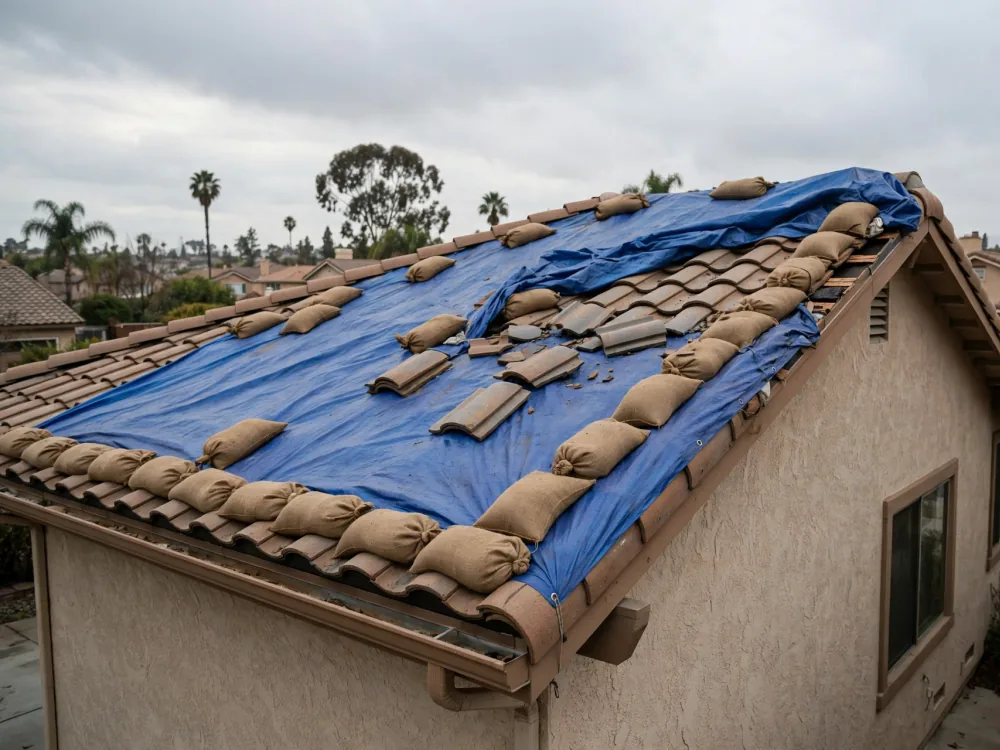
Roof tarps
Heavy tarps secured over damaged roof sections to stop more rain.
When we use it: During or right after the storm.
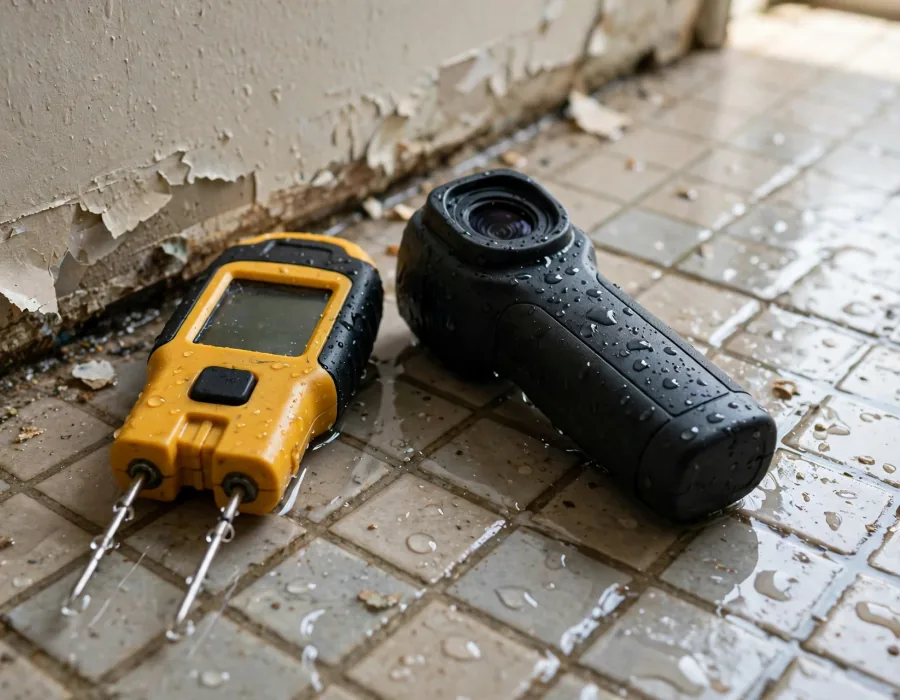
Thermal camera and meters
Find wet ceilings and walls the storm reached.
When we use it: On the first visit.
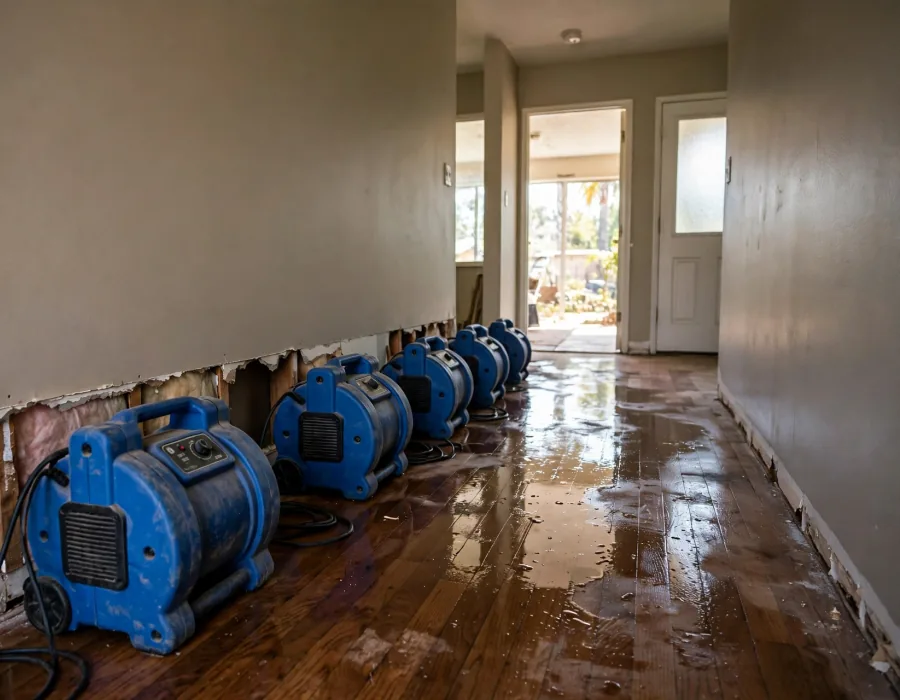
Air movers
Dry ceilings and walls after wet materials come out.
When we use it: Through the drying phase.
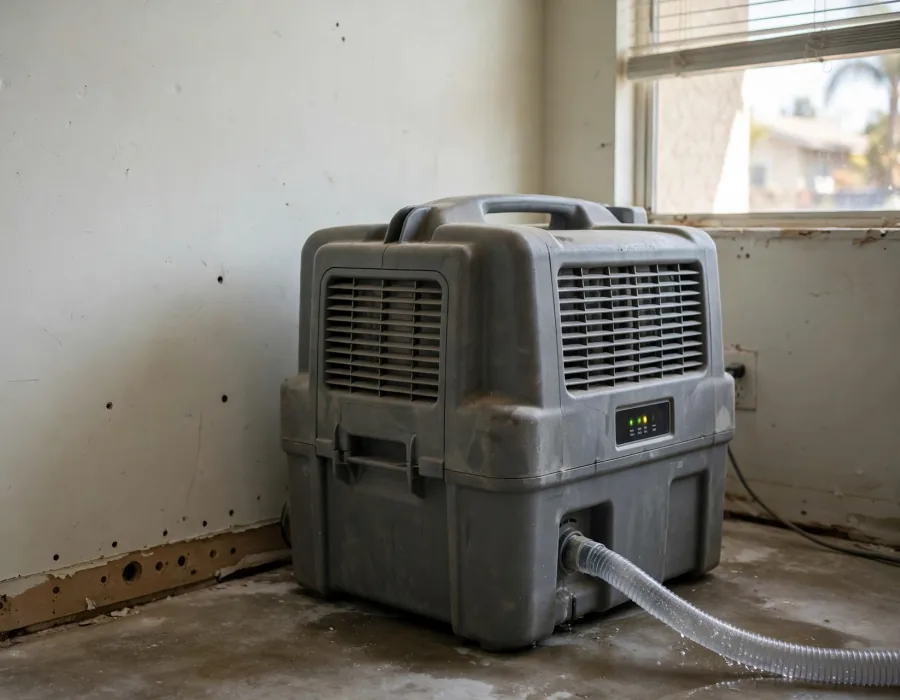
Dehumidifiers
Pull moisture from the air during the damp rainy season.
When we use it: Until the job reads dry.
Why storm damage needs fast action
Rainy season brings one storm after another. A small leak gets bigger with each one.
The next storm usually arrives before the first leak dries.
Stop the next leak
Tarps and board ups keep the next storm out.
Find all the water
Thermal cameras show wet areas past the stain.
Prevent mold
Fast drying stops mold in attics and walls.
Proof for your claim
Photos taken during the storm help show the cause.
Storm damage restoration for homes and businesses
Roofs, windows, and low entries take the most storm damage.
Homes
Tile roofs in Anaheim Hills, older shingle roofs in central Anaheim, and flat roofs on additions all leak differently. We dry and repair the inside after the roof is covered.
- Tile and shingle roofs
- Attics and ceilings
- Garages
- Patio covers
Businesses
Flat roofs on shops, offices, and warehouses can pond water during long storms. We cover leaks and dry the space below.
- Flat roof buildings
- Retail
- Offices
- Warehouses
Storm damage service across Anaheim
Is storm damage covered?
The California Department of Insurance says policies generally pay for rain through a hole made by wind or a falling object. Flooding from outside is not covered.
- 01
Find the cause
Wind or a fallen branch that opens the roof is usually covered. Worn roofs may not be.
- 02
Photos during the storm
Pictures of the opening and the leak help show what happened.
- 03
Prevent more damage
Covering the roof right away is expected by most policies.
- 04
Keep receipts
Save tarp, repair, and drying receipts for your claim.
Your insurance company decides what is covered. We document the damage clearly, but we cannot promise a claim result.
Storm damage questions from Anaheim homeowners
Ask us: (714) 555-0194Can you tarp my roof during a storm?
Yes, when it is safe to get on the roof. Heavy wind or lightning may mean we work from inside first, catching water and protecting belongings. We tarp the roof as soon as conditions allow.
When is storm season in Anaheim?
Most of Anaheim's rain falls from November through March, with January usually the wettest month. Check your roof, gutters, and slope drains in the fall, before the first big storm arrives.
Do I need a roofer or a restoration company?
Often both. A roofer fixes the roof itself. We handle the water inside: tarping to stop more rain, drying ceilings and walls, removing wet insulation, and repairing the interior damage.
My ceiling is sagging after rain. What should I do?
Move people, pets, and furniture away from it right away. A sagging ceiling is holding water and can fall. Put a bucket nearby, turn off power to that room if safe, and call us.
Is wet attic insulation ruined?
Usually. Blown in and batt insulation flattens and holds water once soaked, and it loses its insulating value. We remove wet insulation, dry the attic framing, and new insulation goes in during repairs.
Will my insurance cover a roof leak?
It depends on the cause. Damage from wind or a falling branch is often covered. A leak from an old, worn roof may not be. Photograph the damage and report it to your insurer promptly.