
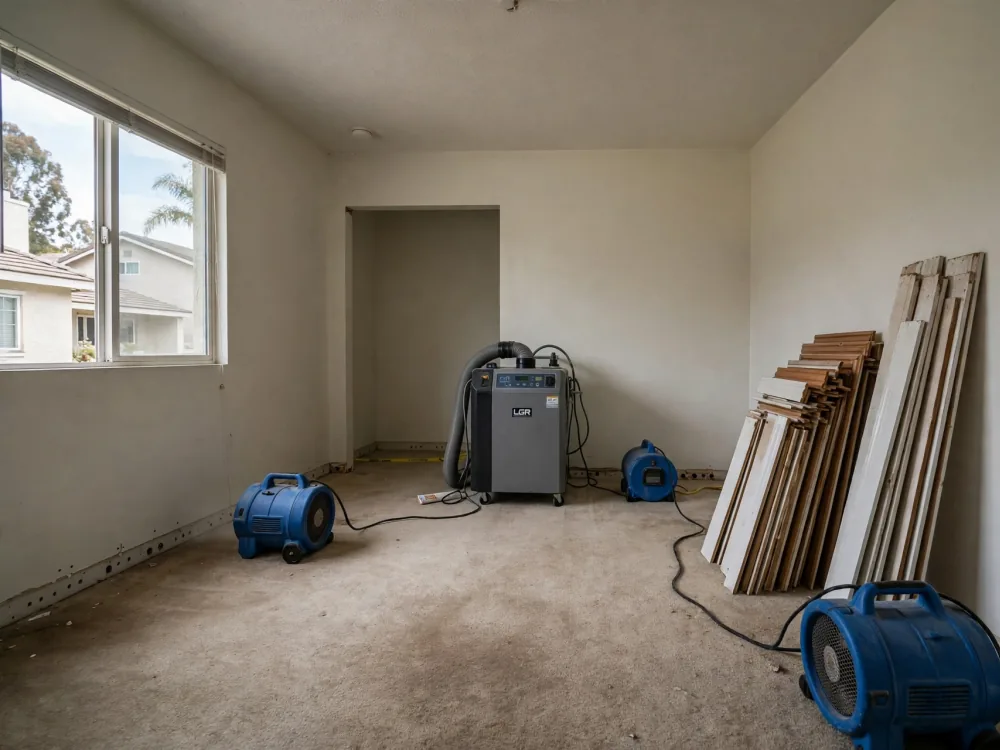
Structural Drying
Structural Drying and Dehumidification in Anaheim, CA
Wet drywall, subfloors, and framing do not dry on their own in time. We set up air movers and dehumidifiers, check moisture every day, and stop only when your Anaheim home reads dry.
- Answered 24 hours a day
- Written estimate first
- We work with your insurance
- Every Anaheim ZIP code
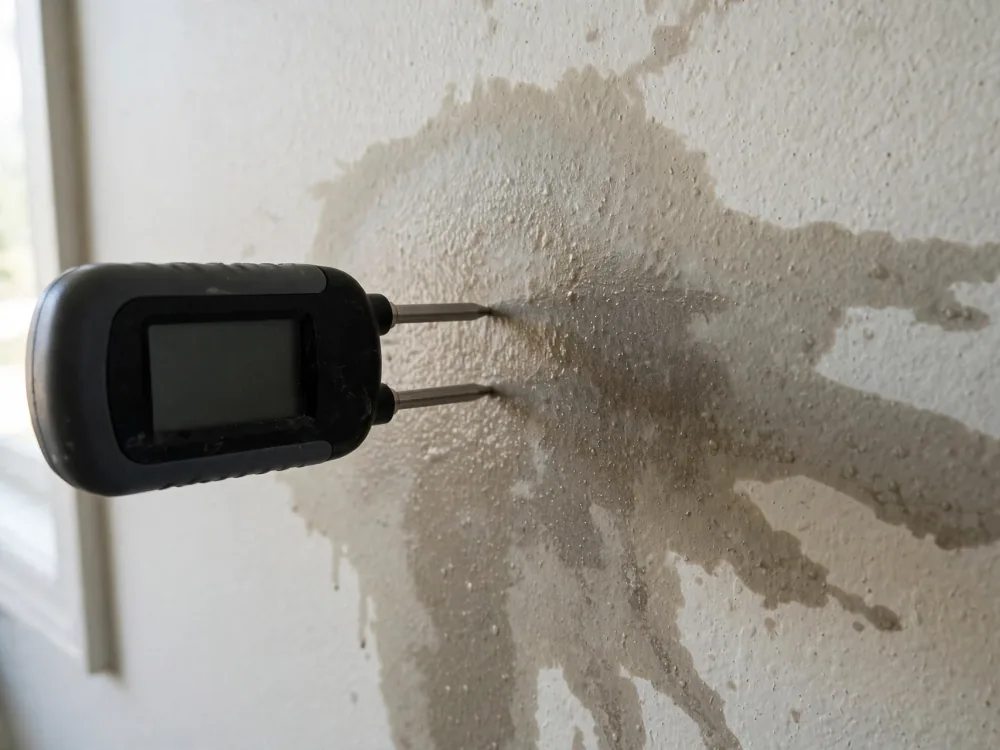
What is structural drying?
Structural drying removes water from inside walls, floors, and framing, not just the surface. We use air movers and dehumidifiers, then check moisture readings daily until every material is back to normal levels.
- The EPA says to dry water damaged areas within 24 to 48 hours.
- Most clean water jobs dry in three to five days with the right equipment.
- It follows emergency water removal and comes before repairs.
When Anaheim homes need structural drying
Any water that soaks into building materials needs drying, even after the floor looks dry.
After a burst pipe
Water runs down inside wall cavities and soaks insulation and bottom plates.
Burst Pipe CleanupAfter a water heater leak
A closet or garage tank soaks the slab and the walls around it.
After a slab leak
Water rises through concrete and saturates the pad and tack strip.
Leak DetectionAfter an upstairs overflow
In two story homes, water soaks the ceiling, joists, and walls below.
After storm water
Rain through a roof or door wets ceilings, attics, and drywall.
Storm DamageUnder raised floors
Older Colony homes need the crawl space and floor framing dried too.
Crawl Space Cleanup
Signs your walls or floors are still wet
A surface can feel dry while the material behind it is soaked.
See a sign? Call (714) 555-0194- Swollen baseboardsWood and MDF trim swell and split as water wicks up.
- Cupping wood floorsBoard edges rise when the subfloor below holds water.
- Musty smell days laterOdor means moisture is still trapped somewhere.
- Spreading wall stainsA water line that keeps climbing shows wet drywall.
- Peeling or bubbling paintPaint lifts when moisture pushes out from behind.
- Damp carpet edgesTack strip and pad stay wet long after the middle dries.
Walls still damp after a leak? We can measure it today.
Call for a moisture check. We map the wet areas and set up drying the same visit.
How our structural drying process works
Drying is measured, not guessed. Here is what happens each day.
- 1
Map the moisture
We take readings in every room and mark the edges of the wet area.
- 2
Open what traps water
We remove baseboards or cut small holes so trapped water can escape.
- 3
Place the equipment
Air movers and dehumidifiers go where the readings say, not just where it looks wet.
- 4
Check every day
We record readings daily and move equipment as areas dry.
- 5
Confirm dry
We pull equipment only when materials match dry reference readings.
Drying equipment, and what each machine does
Each machine solves a different part of the drying problem.
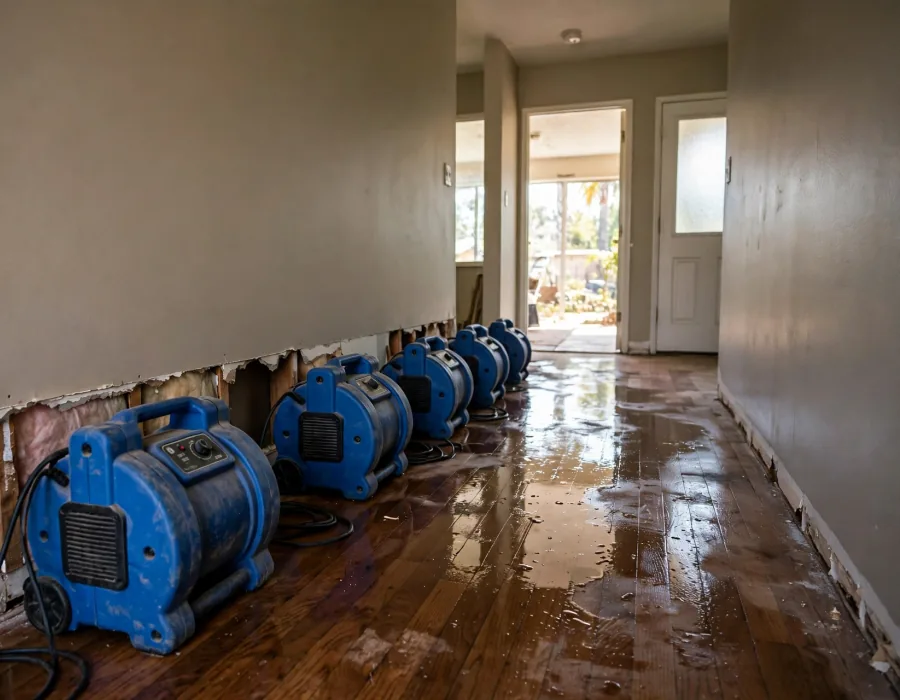
Air movers
Fast, low air across wet surfaces pulls moisture into the air.
When we use it: In every wet room, aimed along the walls.
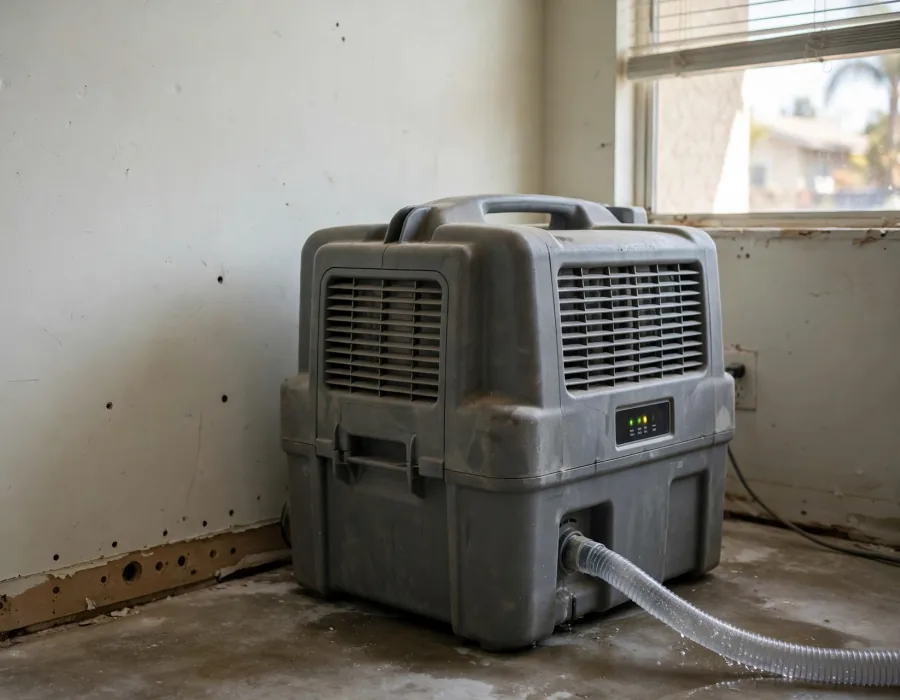
Commercial dehumidifiers
Pull that moisture out of the air and pump it down a drain.
When we use it: Running day and night until the job reads dry.
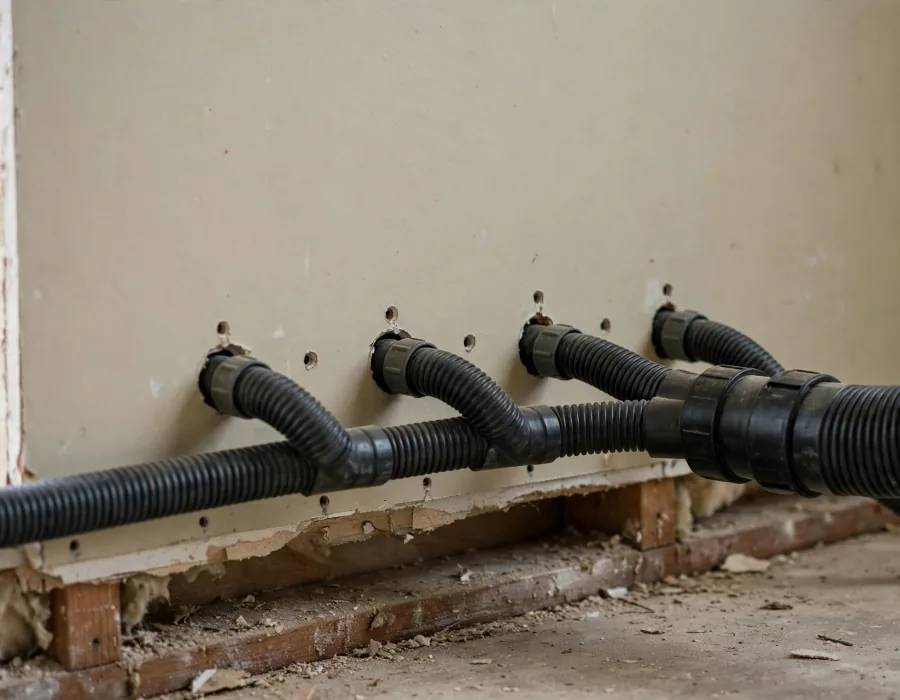
Wall cavity drying system
Forces dry air into closed walls through small holes.
When we use it: When we want to save drywall instead of cutting it.
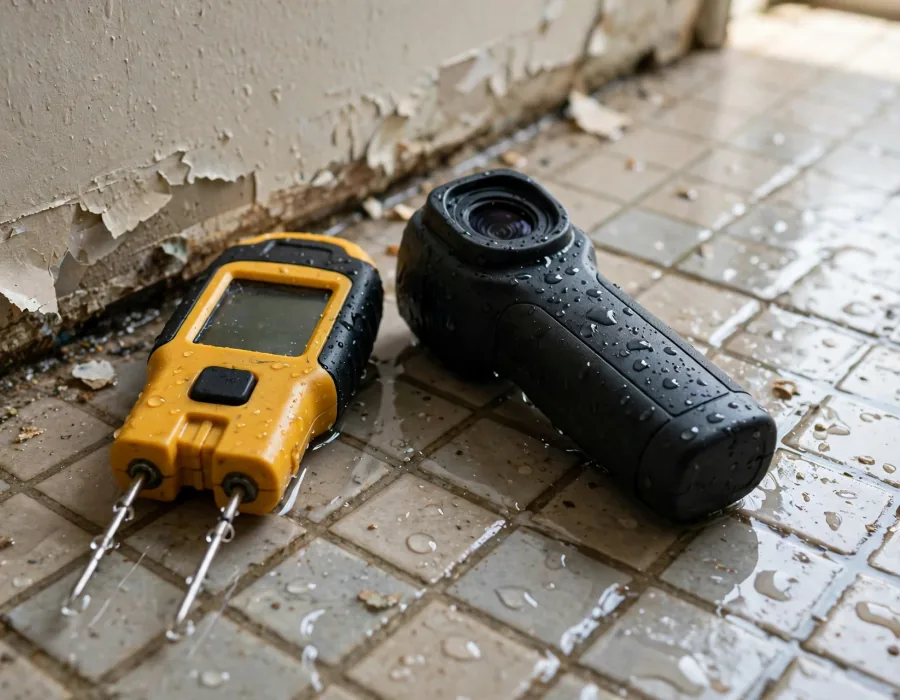
Moisture meters and thermal camera
Measure water in drywall, wood, and concrete.
When we use it: On the first visit and every daily check.
Fans from the garage or professional drying?
Box fans move air. Drying a structure takes moving air, removing moisture, and measuring both.
- Moisture removal✕Box fans: Moves damp air around the roomOur structural drying: Dehumidifiers pull water out of the air
- Inside walls✕Box fans: Cannot reach the cavityOur structural drying: Wall drying systems push air inside
- Knowing when it is dry✕Box fans: Guess by touchOur structural drying: Daily meter readings against dry reference
- Mold risk✕Box fans: High if drying is slowOur structural drying: Lower with drying in days, not weeks
- Records for insurance✕Box fans: NoneOur structural drying: A daily drying log and photos
Structural drying for Anaheim homes and businesses
Every building dries differently. The setup depends on materials and layout.
Homes
Slab homes in West Anaheim dry differently than two story Anaheim Hills homes or raised floor bungalows in the Colony. We plan the setup around how your house was built.
- Slab foundations
- Raised floors
- Two story ceilings
- Condos and townhomes
Commercial buildings
Offices, shops, and hotels near the Anaheim Resort need drying that does not shut the whole building. We section off wet areas and run equipment around your hours.
- Offices
- Retail
- Hotels
- Warehouses
- Drying service across Anaheim:
- Anaheim Hills
- West Anaheim
- Anaheim Colony
- Platinum Triangle
- Anaheim Resort
- All ZIP codes
Drying records and your insurance claim
The California Department of Insurance advises drying wet areas after sudden water damage. Records show you did.
Daily drying log
Readings for each room, each day, until dry.
Photo record
Wet areas, equipment placement, and progress.
Equipment list
What ran, where, and for how many days.
Adjuster updates
We can share the log with your adjuster if you ask.
Your insurance company decides what is covered. We document the damage clearly, but we cannot promise a claim result.
Structural drying questions from Anaheim homeowners
Ask us: (714) 555-0194How long does structural drying take in Anaheim?
Most clean water jobs dry in three to five days. Thick materials, wood floors, and water inside walls can take longer. We check readings every day and pull equipment only when everything reads dry.
Can I turn off the drying equipment at night?
Please leave it running. Drying works around the clock, and turning machines off slows the job and raises mold risk. If noise is a problem, tell us and we can adjust the setup.
Why are the machines so loud and warm?
Air movers push a lot of air, and dehumidifiers give off heat as they pull water from the air. The warmth actually helps drying. Keep doors closed so the room stays warm and dry.
Will my electric bill go up during drying?
Yes, a little. Air movers and dehumidifiers use household outlets for several days. The cost is small next to replacing wet drywall and flooring. Ask your insurer whether they reimburse it.
Can wood floors be saved after water damage?
Often, if drying starts fast. Hardwood that cups slightly can flatten as the subfloor dries. Boards that buckle or stay cupped after drying usually need replacing. Daily readings tell us which way it goes.
How do you know when my house is fully dry?
We compare readings in wet areas to dry areas of the same material in your home. When the numbers match, the material is dry. You get the daily log showing every reading.