
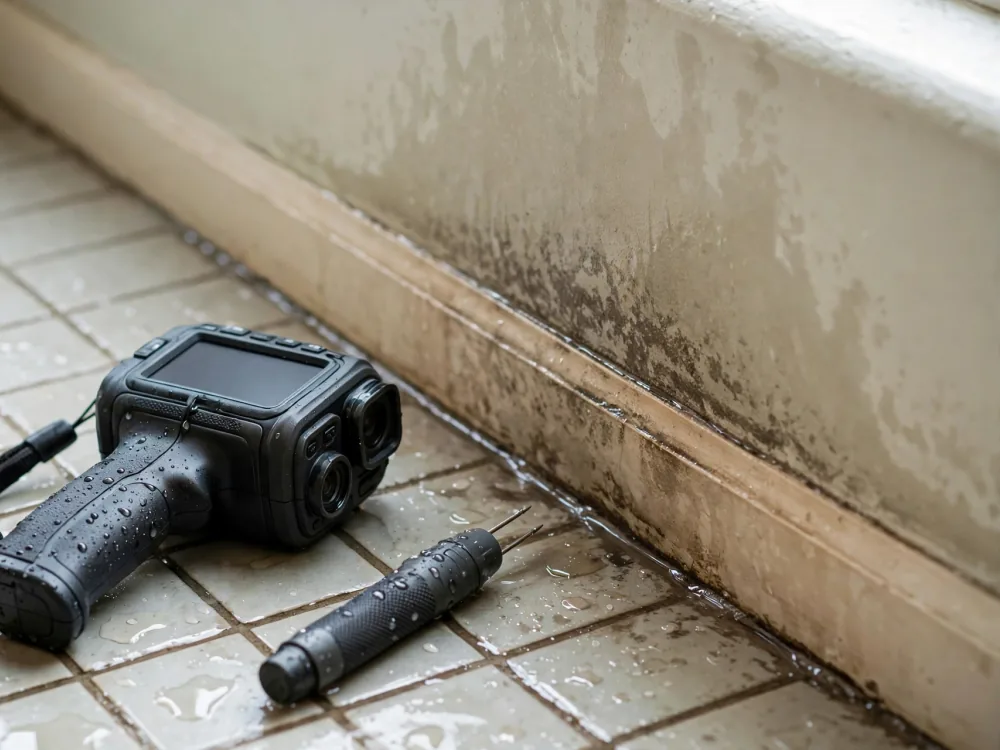
Leak Detection
Leak Detection and Moisture Inspection in Anaheim, CA
A hidden leak damages walls, floors, and slabs long before you see it. We find the water with moisture meters and thermal cameras, map how far it spread, and plan the drying.
- Answered 24 hours a day
- Written estimate first
- We work with your insurance
- Every Anaheim ZIP code
How do you find a hidden water leak?
Start with your water meter. Turn off every tap and watch the dial. If it still moves, water is leaking somewhere. We then use moisture meters and thermal cameras to find where it is going.
- Your meter is usually in a box near the curb
- Half of Anaheim homes were built before 1973
- Found water may need structural drying
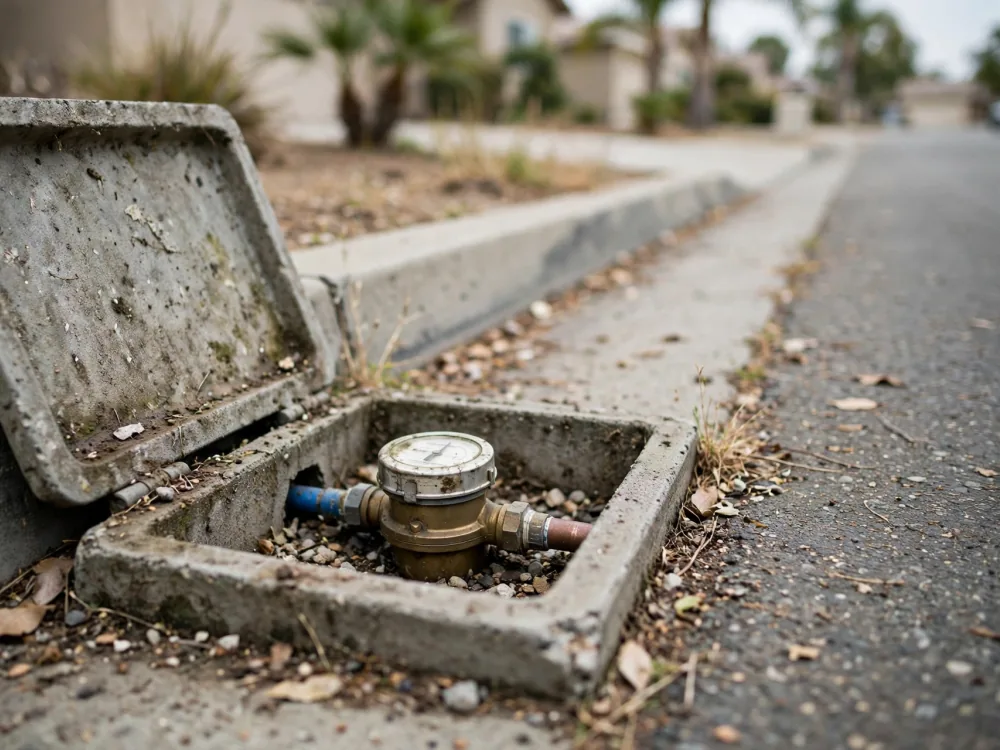
Where hidden leaks hide in Anaheim homes
The most damaging leaks are the slow ones you cannot see.
Under the slab
Hot water lines under the concrete wear thin and leak into the floor.
Inside walls
Pinhole leaks in copper or rusted galvanized lines soak drywall from inside.
Burst Pipe CleanupBehind fixtures
Toilet seals, shower valves, and supply lines leak behind tile.
In ceilings
Upstairs bathrooms and AC drain lines drip into the ceiling below.
At the water heater
Fittings and relief valves leak slowly into closets and garages.
Irrigation lines
Broken sprinkler lines soak soil next to the foundation.
Signs of a hidden leak
Your home usually shows small clues before damage is visible.
High water bill
Your Anaheim Public Utilities bill rises with no change in use.
Meter moves with taps off
The clearest sign water is escaping somewhere.
Warm spots on the floor
A hot water line may be leaking under the slab.
Sound of running water
Water moving inside walls when everything is off.
Musty smell
Moisture trapped in a wall or under flooring.
Stains or soft drywall
Spots that grow or feel soft to the touch.
Water bill spiked? Let us find out where it is going.
We locate the moisture, show you the readings, and explain the next step.
How our leak detection works
We follow the water from clues to source to the edge of the damage.
Find the leak
- 01
Meter test
We confirm water is escaping with all fixtures off.
- 02
Visual check
We inspect fixtures, the water heater, and visible pipes.
- 03
Thermal scan
A thermal camera shows cool, wet areas behind walls and floors.
- 04
Moisture readings
Meters confirm what the camera shows in drywall and wood.
Map the damage
- 05
Mark the wet area
We mark the edges of the damage on walls and floors.
- 06
Photo report
You get photos and readings of everything we found.
- 07
Plumber hand off
Your plumber repairs the pipe at the spot we found.
What often comes next
Leak detection tools, and what each one shows
Tap a tool to see how it helps find hidden water.
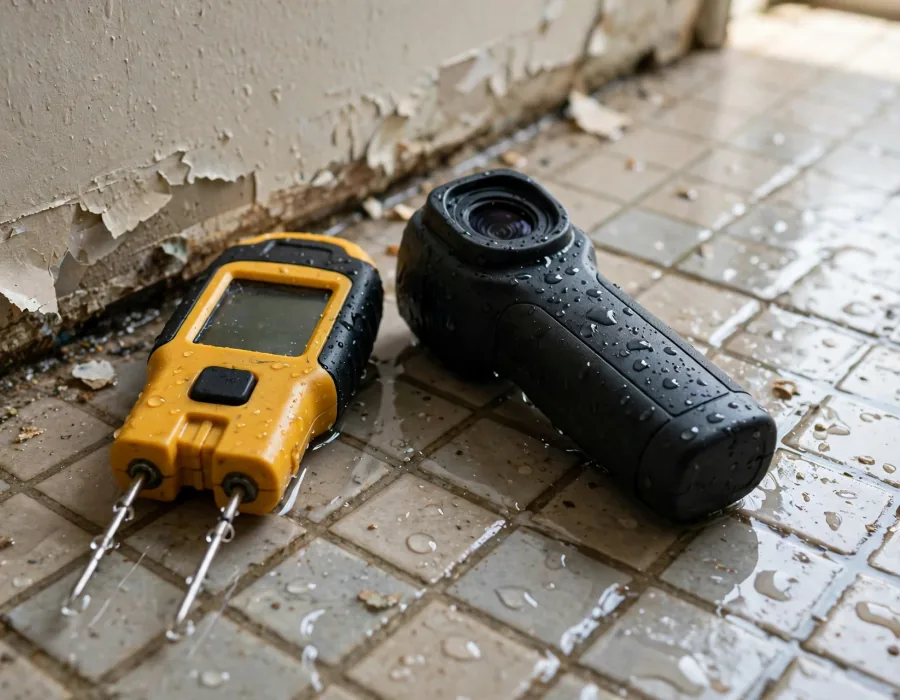
Thermal imaging camera
Shows temperature differences that point to wet areas behind surfaces.
When we use it
First, to scan walls, ceilings, and floors.
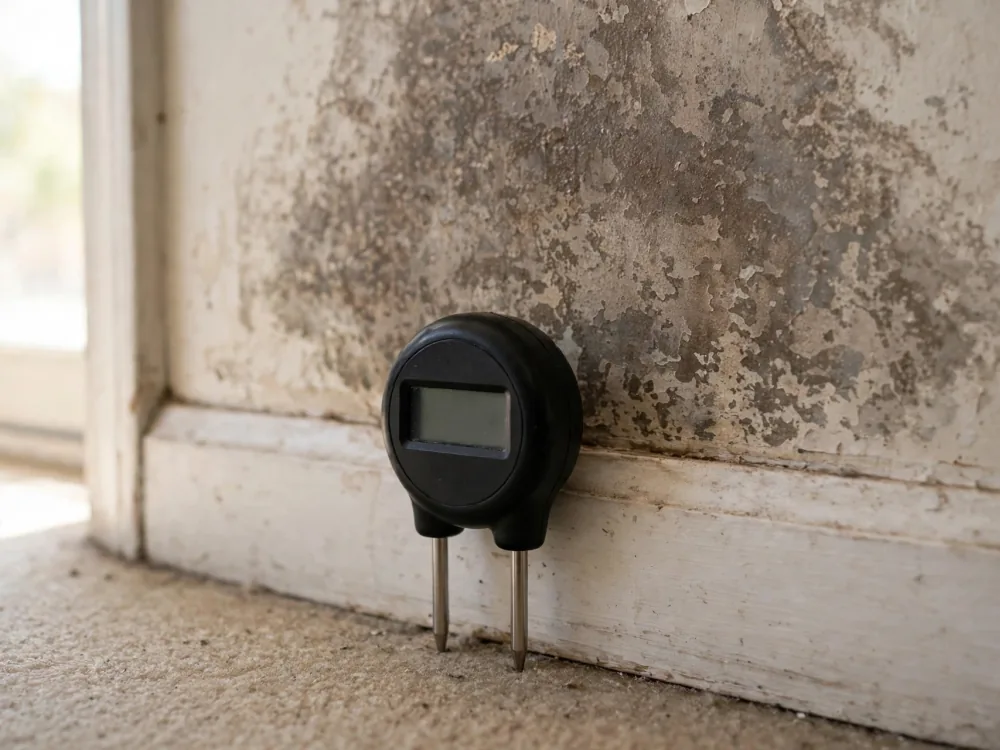
Pin moisture meter
Measures water content inside drywall and wood.
When we use it
To confirm what the thermal camera shows.
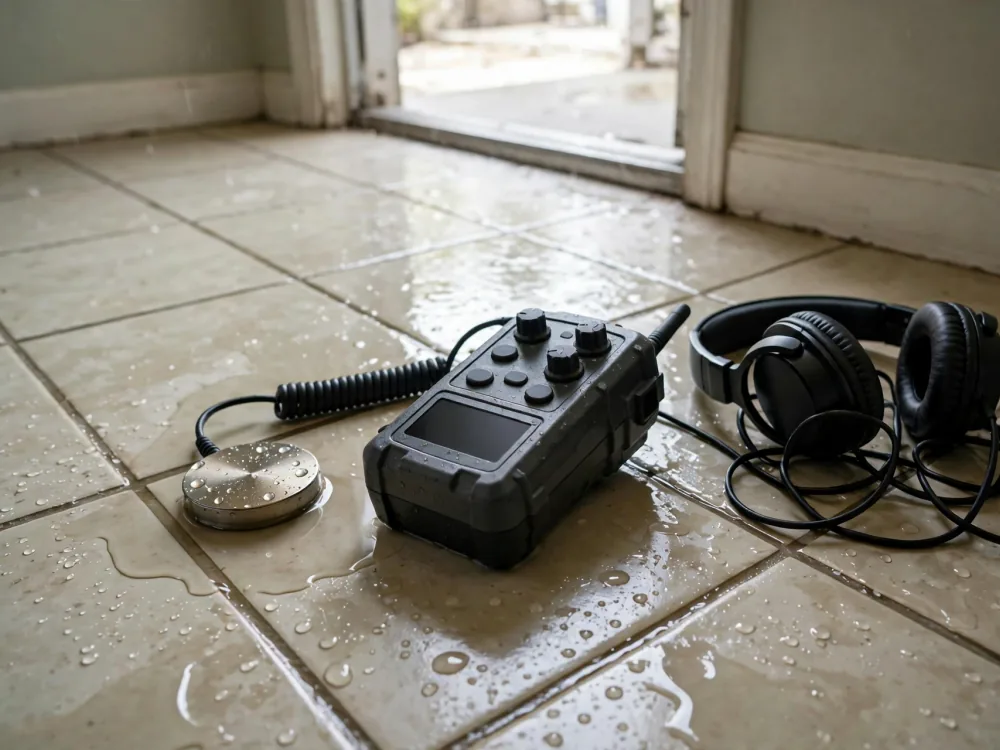
Acoustic listening device
Picks up the sound of water escaping a pressurized pipe.
When we use it
When a slab leak is suspected.
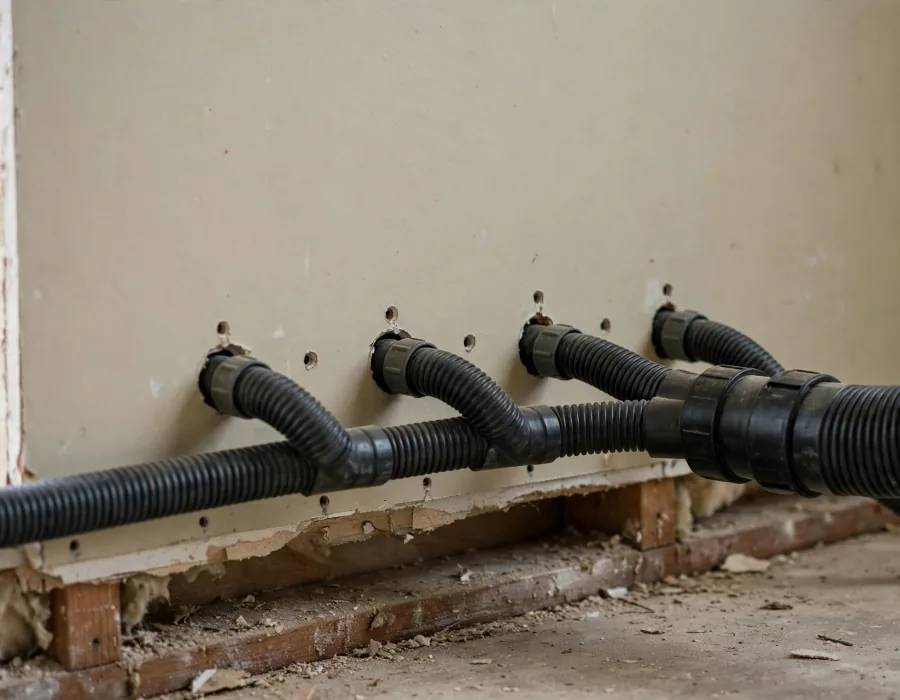
Inspection access
Small openings let us look inside a wall with less damage.
When we use it
When readings point inside a cavity.
Guessing or measuring?
Opening walls to look for a leak costs more than finding it first.
- Finding the leak✕Guessing: Open walls until you find itOur leak detection: Thermal and acoustic tools narrow it down
- Damage to walls✕Guessing: Large holesOur leak detection: Small, targeted openings
- Knowing the spread✕Guessing: UnknownOur leak detection: Moisture map of every wet area
- Plumber time✕Guessing: Hours of searchingOur leak detection: Goes straight to the spot
- Records for insurance✕Guessing: NoneOur leak detection: Photos and readings
Leak detection for Anaheim homes and buildings
Every building hides leaks in different places.
Homes
Slab homes from the 1950s through 1970s often leak under the floor. Two story homes leak into ceilings. We check the places your type of home usually hides water.
- Slab homes
- Two story homes
- Condos
- Rentals
Commercial and multi unit
In apartments and offices, one leak can show up two floors away. We trace it through shared walls and ceilings.
- Apartment buildings
- Offices
- Restaurants
- Hotels
Leak detection across Anaheim
Hidden leaks and insurance
The California Department of Insurance lists water damage from seepage or leaks as generally not covered. Sudden damage is different.
Slow leak exclusion
Damage from a long, slow leak is often excluded.
Sudden failure
A pipe that breaks suddenly may be covered.
Document it
Our photos and readings show what we found.
Ask your agent
Your policy wording decides coverage.
Your insurance company decides what is covered. We document the damage clearly, but we cannot promise a claim result.
Leak detection questions from Anaheim homeowners
Ask us: (714) 555-0194How do I check for a leak with my water meter?
Turn off every faucet, appliance, and sprinkler. Find your meter, usually in a box near the curb, and watch the small leak indicator. If it moves with everything off, water is leaking somewhere.
What does a slab leak feel like?
You may feel a warm spot on a tile or wood floor, often in a line. You might also hear water running with taps off. Damp carpet edges and a rising water bill are other clues.
Do you repair the leak too?
We find the water and map the damage, then a plumber repairs the pipe. Once the leak is fixed, we dry the structure and handle repairs. That keeps each part of the job in skilled hands.
Can you find a leak without opening walls?
Usually we can narrow it down without cutting. Thermal cameras and moisture meters show where water is behind the surface. If we do need to look inside, we make small, targeted openings.
How long does leak detection take?
Most homes take one to three hours. Larger homes, slab leaks, or leaks between floors can take longer. You get photos and readings before we leave, so you know what comes next.
Is a hidden leak covered by insurance?
Often not. The state's homeowners guide lists damage from seepage or slow leaks as generally not covered. A pipe that fails suddenly is treated differently. Check your policy and report damage quickly.